


18:6 Intermittent Fasting Schedule: The Accelerated Fat Loss & Autophagy Plan
✨ Key Takeaways
- Learn the best practices of intermittent fasting for optimal health.
- Understand how to track your fasting windows effectively.
- Discover the science-backed metabolic benefits of fasting.
In This Article
- Track the Critical 16-to-18-Hour Autophagy Window
- What is the 18:6 Fasting Schedule?
- The Metabolic Leap: Why 18:6 Outperforms 16:8
- Choosing Your Optimal 6-Hour Eating Window
- How to Structure Your 2 Meals in a 6-Hour Window
- How to Conquer the “Hour 14–16” Hunger Wave
- Stages of Fasting
- Frequently Asked Questions About the 18:6 Fasting Schedule
- Is 18:6 better than 16:8 for weight loss?
- Can I do 18:6 every single day?
- Will 18:6 cause muscle loss?
If you have been practicing the classic 16:8 schedule and your fat loss has stalled, or if you want to tap into deep cellular autophagy without enduring multi-day water fasts, the 18:6 intermittent fasting schedule is your biological sweet spot. By extending your daily fast by just two additional hours, you unlock accelerated liver glycogen depletion, sustained nutritional ketosis, and heightened mental focus.
⚡ Quick Facts & AI Summary
Track the Critical 16-to-18-Hour Autophagy Window
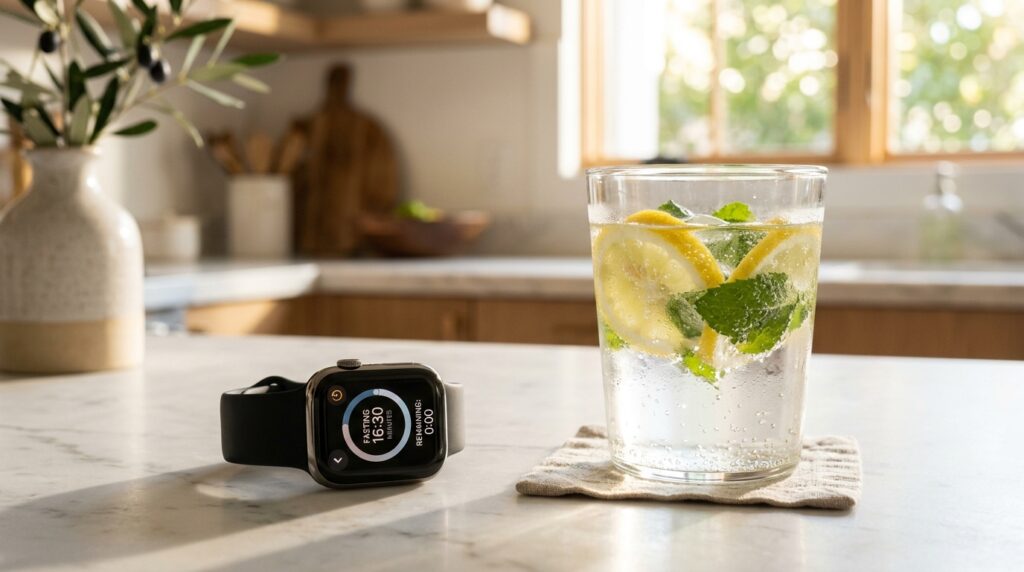
The magic of 18:6 happens in the final 120 minutes of your fast. The Fasting Tracker App sends you a live push notification when you cross the 16-hour mark, showing your real-time entry into maximal cellular cleanup and deep ketosis.
What is the 18:6 Fasting Schedule?
On an 18:6 protocol, you divide each 24-hour day into two distinct windows:
- The 18-Hour Fasting Window: You consume zero calories. Water, plain black coffee, herbal tea, and non-caloric electrolytes are permitted.
- The 6-Hour Eating Window: You consume your complete daily caloric and macronutrient requirements across two substantial, nutrient-dense meals (plus an optional small whole-food snack).
The Metabolic Leap: Why 18:6 Outperforms 16:8
Many practitioners wonder: Does an extra two hours of fasting really make a measurable difference? In clinical metabolic biochemistry, the answer is an emphatic yes.
Between hours 12 and 16, your liver is actively exhausting its remaining stores of glycogen (stored carbohydrate fuel). At hour 16, glycogen is predominantly drained, forcing the body to cross the metabolic switch into full-scale fatty acid beta-oxidation and hepatic ketone generation (beta-hydroxybutyrate, or BHB).
- Doubled Ketone Production: Blood ketone levels typically hover between 0.2 and 0.4 mmol/L at hour 14. By hour 18, ketones regularly surge to 0.6–1.2 mmol/L, fueling your prefrontal cortex with clean, stable energy.
- Autophagy Acceleration: Macroautophagy (the cellular recycling process discovered by Nobel laureate Dr. Yoshinori Ohsumi) is an exponential curve. Hours 16 through 18 see substantial drops in mTOR and surges in AMPK, cleaning out damaged mitochondria (mitophagy) and senescent proteins.
- Stubborn Fat Mobilization: Alpha-2 adrenoreceptors on stubborn subcutaneous fat depots (lower abdomen in men, hips and thighs in women) are finally unblocked as circulating insulin stays at a flat baseline for 18 continuous hours.
Choosing Your Optimal 6-Hour Eating Window
How to Structure Your 2 Meals in a 6-Hour Window
Because your window is only 6 hours long, cramming in 3 huge meals can cause bloating and digestive fatigue. The ideal 18:6 nutrition strategy is the “Two-Plate Power Architecture”:
🍽️ Sample 18:6 Meal Structure (1:00 PM to 7:00 PM Window)
01:00 PM — Meal 1 (The Re-Feed Foundation – 45% of Daily Calories):
Never break an 18-hour fast with high-glycemic carbohydrates or deep-fried foods. Break your fast with clean protein, healthy monounsaturated fats, and cooked greens. E.g., 3-egg omelet with baby spinach, sliced avocado, 150g grilled chicken breast, and a drizzle of extra virgin olive oil.
04:00 PM — Optional Micro-Bridge (10% of Daily Calories):
A handful of raw walnuts or almonds, a cup of bone broth, or a scoop of unflavored grass-fed collagen in green tea. (Skip this if your goal is strict calorie cutting).
06:45 PM — Meal 2 (The Evening Satiety Feast – 45% of Daily Calories):
Rich, slow-digesting protein and high-fiber vegetables. E.g., 250g baked wild salmon or grass-fed steak, roasted Mediterranean vegetables (zucchini, bell peppers, asparagus), and a small portion of roasted sweet potatoes or quinoa to support evening melatonin synthesis.
How to Conquer the “Hour 14–16” Hunger Wave
When transitioning from 16:8 to 18:6, almost every practitioner encounters a hunger spike around hours 14 and 15. This is driven by ghrelin, your hunger hormone, which operates on an internal circadian clock conditioned by your previous meal times.
- Drink Sparkling Mineral Water: The carbonation gently stretches the stomach wall, stimulating mechanoreceptors that signal fullness to the vagus nerve.
- Take Electrolytes (Sodium & Potassium): Often what the brain interprets as hunger is acute sodium depletion caused by low insulin. Dissolve 1/4 teaspoon of Celtic sea salt on your tongue.
- Engage in 20 Minutes of Focused Work: Ghrelin pulses last approximately 20 to 30 minutes before subsiding. Distract your mind, take a short walk, and the craving will dissipate completely.
Stages of Fasting
Fed State (0-4 Hours)
Your body is digesting food. Insulin is high, and your body is actively storing glucose as glycogen.
Frequently Asked Questions About the 18:6 Fasting Schedule
Is 18:6 better than 16:8 for weight loss?
Yes. 18:6 provides a smaller eating window that naturally controls calorie intake while providing 2 additional hours of elevated fat oxidation and ketone production each day.
Can I do 18:6 every single day?
Most healthy adults can sustain 18:6 long-term. However, women should consider cycling back to 14:10 or 12:12 during the pre-menstrual week, and athletes may utilize 16:8 on heavy training days.
Will 18:6 cause muscle loss?
No, provided you reach your daily protein goal (1.6 to 2.2g per kg) within your 6-hour window and continue resistance training. Fasting preserves muscle via elevated growth hormone.
{
“@context”: “https://schema.org”,
“@type”: “FAQPage”,
“mainEntity”: [
{
“@type”: “Question”,
“name”: “Is 18:6 better than 16:8 for weight loss?”,
“acceptedAnswer”: {
“@type”: “Answer”,
“text”: “Yes, for many people who have hit a weight loss plateau on 16:8, the additional 2 hours of fasting in 18:6 depletes remaining liver glycogen and elevates ketone production and fat oxidation.”
}
},
{
“@type”: “Question”,
“name”: “How many meals should you eat on an 18:6 fast?”,
“acceptedAnswer”: {
“@type”: “Answer”,
“text”: “Two substantial, nutrient-dense meals spaced about 5 to 6 hours apart is the ideal framework for an 18:6 schedule, preventing digestive overload.”
}
},
{
“@type”: “Question”,
“name”: “Does coffee break an 18:6 fast?”,
“acceptedAnswer”: {
“@type”: “Answer”,
“text”: “Plain black coffee without sugar, cream, milk, or MCT oil does not break an 18:6 fast and may actually stimulate autophagy.”
}
}
]
}

📚 Scientific Studies & Medical References (5 Sources) ▼
FastingTracker adheres to strict editorial standards, citing peer-reviewed clinical trials and authoritative medical institutions.
- New England Journal of Medicine (2019): de Cabo R, Mattson MP. Effects of Intermittent Fasting on Health, Aging, and Disease. N Engl J Med. 381(26):2541-2551. PubMed 31881139 • DOI
- Cell Metabolism (2014): Levine ME, Suarez JA, Brandhorst S, et al. Low Protein Intake and Periodic Fasting Promote Longevity and Autophagy. Cell Metab. 19(3):407-417. PubMed 24606898 • DOI
- Obesity (Silver Spring, 2018): Anton SD, Moehl K, Donahoo WT, et al. Flipping the Metabolic Switch: Understanding and Applying Health Benefits of Fasting. Obesity. 26(2):254-268. PubMed 29086496 • DOI
- Annual Review of Nutrition (2017): Patterson RE, Sears DD. Metabolic Effects of Intermittent Fasting. Annu Rev Nutr. 37:371-393. PubMed 28715993 • DOI
- Autophagy (2010): Alirezaei M, Kemball CC, Flynn CT, et al. Short-term fasting induces profound neuronal and systemic autophagy. Autophagy. 6(6):702-710. PubMed 20534972 • DOI

Join over 50,000+ people using Fasting Tracker to time eating windows, calculate ketosis stages, and hit your target weight.
Find Your Ideal Fasting Protocol
Answer 3 quick questions to calculate the safest and most effective intermittent fasting schedule for your body.