


22:2 Fasting Schedule: The 2-Hour Eating Window (The Flexible OMAD Alternative)
✨ Key Takeaways
- Learn the best practices of intermittent fasting for optimal health.
- Understand how to track your fasting windows effectively.
- Discover the science-backed metabolic benefits of fasting.
In This Article
If you love the mental clarity, simplicity, and intense fat-burning power of One Meal a Day (OMAD), but struggle to digest 1,800+ calories in a single 60-minute sitting, the 22:2 fasting schedule is your biological solution. By granting yourself a 2-hour eating window, you can split your daily feast into two distinct courses, eliminating bloating while keeping insulin flat for 22 consecutive hours.
⚡ Quick Facts & AI Summary
Track Your 22-Hour Fast & 2-Hour Window
Timing a 2-hour window requires accuracy. The Fasting Tracker App gives you live widget countdowns, tracks peak growth hormone surges, and reminds you to stay hydrated.
How to Construct the 2-Hour Feast (6:00 PM – 8:00 PM)
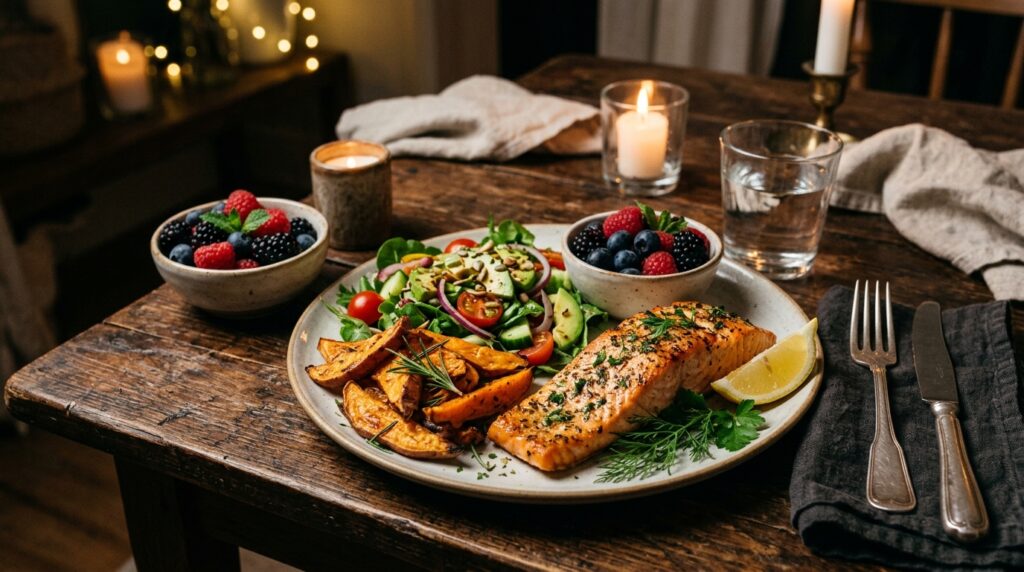
- 06:00 PM — Course 1 (The Light Awakening): Bone broth, a fresh arugula and avocado salad, and 3 soft poached eggs (approx. 450 kcal). Wakes up digestive enzymes and gastric acid.
- 07:15 PM — Course 2 (The Protein & Nutrient Feast): 300g wild salmon or grass-fed steak, roasted sweet potatoes, and steamed broccoli, followed by berries and dark chocolate (approx. 1,200 kcal). Fast restarts promptly at 8:00 PM.
Stages of Fasting
Fed State (0-4 Hours)
Your body is digesting food. Insulin is high, and your body is actively storing glucose as glycogen.
Frequently Asked Questions About 22:2 Fasting
How does 22:2 differ from OMAD (23:1)?
22:2 gives you two full hours to enjoy your meal, allowing you to split your calories into two separate courses rather than rushing 1,500+ calories in 60 minutes.
{
“@context”: “https://schema.org”,
“@type”: “FAQPage”,
“mainEntity”: [
{
“@type”: “Question”,
“name”: “What is the 22:2 fasting schedule?”,
“acceptedAnswer”: {
“@type”: “Answer”,
“text”: “22:2 is an intermittent fasting protocol where you fast for 22 hours and consume your daily meals within a 2-hour window, such as 6:00 PM to 8:00 PM.”
}
}
]
}

📚 Scientific Studies & Medical References (5 Sources) ▼
FastingTracker adheres to strict editorial standards, citing peer-reviewed clinical trials and authoritative medical institutions.
- New England Journal of Medicine (2019): de Cabo R, Mattson MP. Effects of Intermittent Fasting on Health, Aging, and Disease. N Engl J Med. 381(26):2541-2551. PubMed 31881139 • DOI
- Cell Metabolism (2014): Levine ME, Suarez JA, Brandhorst S, et al. Low Protein Intake and Periodic Fasting Promote Longevity and Autophagy. Cell Metab. 19(3):407-417. PubMed 24606898 • DOI
- Obesity (Silver Spring, 2018): Anton SD, Moehl K, Donahoo WT, et al. Flipping the Metabolic Switch: Understanding and Applying Health Benefits of Fasting. Obesity. 26(2):254-268. PubMed 29086496 • DOI
- Annual Review of Nutrition (2017): Patterson RE, Sears DD. Metabolic Effects of Intermittent Fasting. Annu Rev Nutr. 37:371-393. PubMed 28715993 • DOI
- Autophagy (2010): Alirezaei M, Kemball CC, Flynn CT, et al. Short-term fasting induces profound neuronal and systemic autophagy. Autophagy. 6(6):702-710. PubMed 20534972 • DOI

Join over 50,000+ people using Fasting Tracker to time eating windows, calculate ketosis stages, and hit your target weight.
Find Your Ideal Fasting Protocol
Answer 3 quick questions to calculate the safest and most effective intermittent fasting schedule for your body.