


High-Protein Intermittent Fasting: Fat Loss & Muscle Retention Plan
✨ Key Takeaways
- Learn the best practices of intermittent fasting for optimal health.
- Understand how to track your fasting windows effectively.
- Discover the science-backed metabolic benefits of fasting.
In This Article
- Why High Protein + Intermittent Fasting is the Ultimate Fat Loss Stack
- Calculating Your Daily Protein Target
- Sample High-Protein Fasting Day
- Frequently Asked Questions About High-Protein Fasting
- Can your body absorb more than 30g of protein in one meal?
- Will high protein kick me out of ketosis?
- Is high protein harmful to kidneys during fasting?
When fat loss is your objective, traditional calorie restriction often leads to unwanted muscle loss and metabolic slowdown. Combining high-protein nutrition with intermittent fasting solves this dilemma completely.
⚡ Quick Facts & AI Summary
Why High Protein + Intermittent Fasting is the Ultimate Fat Loss Stack
Consuming adequate protein while restricting your eating window yields powerful scientific benefits:
- High Thermic Effect of Food (TEF): Your body burns roughly 20–30% of protein calories just during the digestion and assimilation process (compared to only 5–10% for carbs and 0–3% for fats).
- Satiety Hormone Surge: Protein strongly elevates peptide YY (PYY) and GLP-1 while suppressing the hunger hormone ghrelin, making the subsequent 16-hour fast completely effortless.
- Lean Muscle Preservation: When in a caloric deficit, high dietary protein signals the body to preserve lean muscle tissue and burn stored body fat for fuel.
Calculating Your Daily Protein Target
Clinical sports nutrition consensus recommends 1.6 to 2.2 grams of protein per kilogram of body weight (0.8–1.0g per pound). In an 8-hour window, distribute this into two large meals providing 40–60g of protein each, plus an optional high-protein snack.
Sample High-Protein Fasting Day
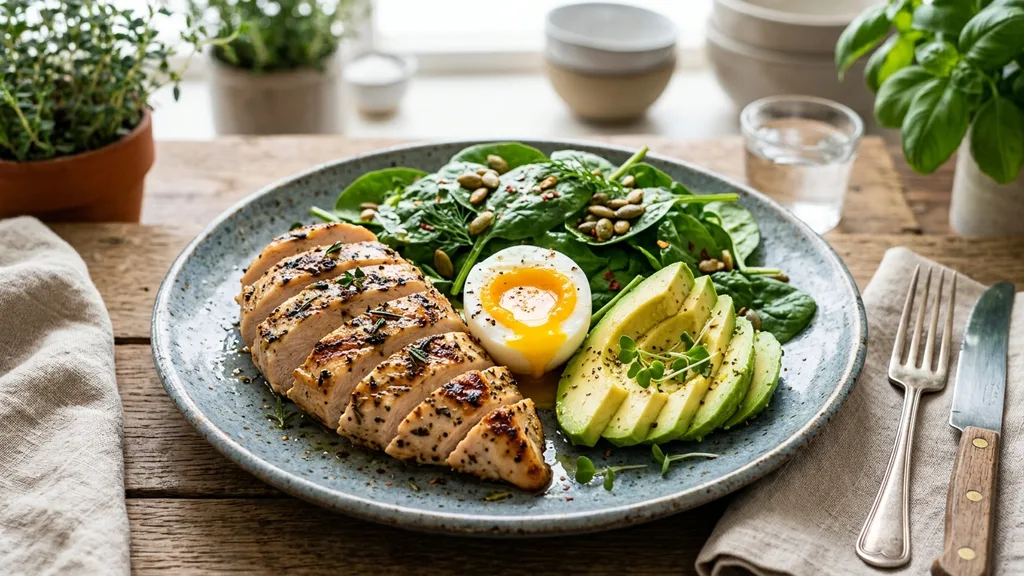
- Meal 1 (12:00 PM): 200g grilled chicken breast or sirloin steak, 2 pasture-raised eggs, 1/2 avocado, and a large spinach salad (approx. 65g protein).
- Snack (3:30 PM): 200g Greek yogurt or cottage cheese with a scoop of whey isolate and raw walnuts (approx. 35g protein).
- Meal 2 (7:30 PM): 220g wild-caught salmon or cod fillet, roasted asparagus, and sweet potato (approx. 50g protein).
Frequently Asked Questions About High-Protein Fasting
Can your body absorb more than 30g of protein in one meal?
YES! The myth that you can only absorb 30g of protein at a time has been thoroughly debunked. The digestive tract simply slows transit time to absorb larger protein boluses over several hours.
Will high protein kick me out of ketosis?
Gluconeogenesis (converting protein to glucose) is a demand-driven process, not a supply-driven one. High protein will not kick you out of fat-burning ketosis.
Is high protein harmful to kidneys during fasting?
In individuals with normal, healthy kidney function, extensive clinical research confirms that high protein intake (up to 2.5g/kg) is completely safe and causes no kidney impairment.

📚 Scientific Studies & Medical References (5 Sources) ▼
FastingTracker adheres to strict editorial standards, citing peer-reviewed clinical trials and authoritative medical institutions.
- New England Journal of Medicine (2019): de Cabo R, Mattson MP. Effects of Intermittent Fasting on Health, Aging, and Disease. N Engl J Med. 381(26):2541-2551. PubMed 31881139 • DOI
- Cell Metabolism (2014): Levine ME, Suarez JA, Brandhorst S, et al. Low Protein Intake and Periodic Fasting Promote Longevity and Autophagy. Cell Metab. 19(3):407-417. PubMed 24606898 • DOI
- Obesity (Silver Spring, 2018): Anton SD, Moehl K, Donahoo WT, et al. Flipping the Metabolic Switch: Understanding and Applying Health Benefits of Fasting. Obesity. 26(2):254-268. PubMed 29086496 • DOI
- Annual Review of Nutrition (2017): Patterson RE, Sears DD. Metabolic Effects of Intermittent Fasting. Annu Rev Nutr. 37:371-393. PubMed 28715993 • DOI
- Autophagy (2010): Alirezaei M, Kemball CC, Flynn CT, et al. Short-term fasting induces profound neuronal and systemic autophagy. Autophagy. 6(6):702-710. PubMed 20534972 • DOI

Join over 50,000+ people using Fasting Tracker on Android and iOS to time eating windows, calculate ketosis stages, and hit your target weight.
Find Your Ideal Fasting Protocol
Answer 3 quick questions to calculate the safest and most effective intermittent fasting schedule for your body.
🥗 Best Meals to Break Your Fast
Gentle, nutrient-dense dishes designed to avoid insulin spikes and digestive discomfort when exiting your fast.