


Intermittent Fasting and Cholesterol: Does Fasting Raise LDL?
✨ Key Takeaways
- Learn the best practices of intermittent fasting for optimal health.
- Understand how to track your fasting windows effectively.
- Discover the science-backed metabolic benefits of fasting.
In This Article
- The Cholesterol Paradox
- Why LDL Cholesterol Rises During a Fast
- ⏱️ Track Your Metabolic Healing
- The Important Metrics: Triglycerides and HDL
- Particle Size Matters (Pattern A vs. Pattern B)
- Key Takeaways for Fasting and Cholesterol
- Ready to Optimize Your Heart Health?
- Frequently Asked Questions
- Does It Break Your Fast? Interactive Drink Checker
- 📖 Related Fasting Guides & Research

The Cholesterol Paradox
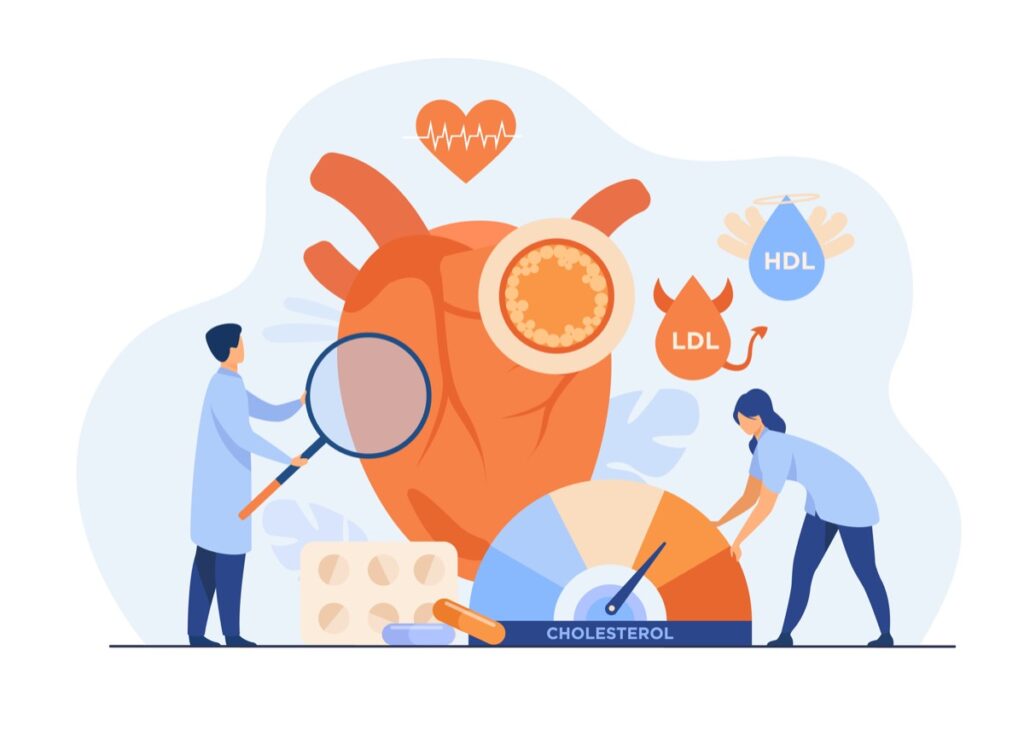
Intermittent fasting is widely praised by cardiologists and metabolic specialists for its ability to lower blood pressure, reduce inflammation, and drastically drop triglycerides. By all standard metrics, fasting is incredible for cardiovascular health. Yet, many fasters experience a sudden moment of panic when they get their annual blood test back: their LDL cholesterol (often called “bad” cholesterol) has spiked.
How can a practice that burns fat and reverses insulin resistance cause cholesterol to rise? Is intermittent fasting actually dangerous for your heart? To understand this paradox, we have to look deeper than the standard lipid panel and understand how the body transports fat for energy during a fast.
Expert Take (Aly Owen): “I see this panic all the time. A client loses 20 pounds, feels amazing, but their doctor wants to put them on statins because their LDL went up. In the context of fasting and weight loss, a temporary rise in LDL is often a sign that the body is actively mobilizing and burning fat, not a sign of impending heart disease.”
Why LDL Cholesterol Rises During a Fast
To understand the spike in LDL, you must understand what cholesterol actually does. Cholesterol and triglycerides are lipids (fats). Because blood is water-based, fat cannot dissolve in it. The liver packages these fats into “boats” called lipoproteins (like LDL and HDL) to transport them through the bloodstream to the cells.
When you eat a standard diet, your cells run on glucose. When you practice intermittent fasting (or a Keto diet), you deplete glucose and force your body to run on fat. Here is what happens:
- Your insulin drops, signaling the fat cells to release stored body fat (triglycerides).
- These fats travel to the liver.
- The liver packages these fats into VLDL and LDL particles and ships them out into the bloodstream to be used as energy by your muscles and organs.
Therefore, when you are fasting and actively losing weight, the “traffic” of fat in your bloodstream increases because you are using it for fuel. This increased traffic often registers on a blood test as elevated LDL cholesterol.
⏱️ Track Your Metabolic Healing
True cardiovascular health is about consistency and managing insulin. Download our Simple Intermittent Fasting Tracker app on iOS to log your fasting hours and monitor your long-term weight loss progress.
The Important Metrics: Triglycerides and HDL
Modern lipidology recognizes that total LDL is a poor predictor of heart disease, especially in the context of low insulin. Instead, cardiologists look closely at two other markers that intermittent fasting almost universally improves:
- Triglycerides Plunge: Because you are burning fat for fuel and keeping insulin low, fasting drastically clears triglycerides from the blood. High triglycerides are a major risk factor for heart disease.
- HDL Rises: HDL (the “good” cholesterol) often rises or remains stable during fasting, improving the ratio of HDL to total cholesterol.
The most important marker for cardiovascular risk is the Triglyceride-to-HDL ratio. Even if your LDL goes up, if your triglycerides plummet and your HDL rises (which is exactly what fasting does), your overall cardiovascular risk profile has likely improved significantly.
Particle Size Matters (Pattern A vs. Pattern B)
Not all LDL is the same. There are large, fluffy LDL particles (Pattern A), which are buoyant and generally harmless. Then there are small, dense, oxidized LDL particles (Pattern B), which are dangerous because they can penetrate the arterial wall and cause plaque buildup.
High-sugar, highly processed diets cause an explosion of the dangerous small, dense LDL (Pattern B). Intermittent fasting, by lowering insulin and reducing inflammation, shifts the body to produce the large, fluffy, harmless LDL (Pattern A). So, while your total LDL number might be higher, the quality of the particles is much safer.
Key Takeaways for Fasting and Cholesterol
- Wait for Weight Stability: Never test your cholesterol while you are actively losing weight quickly. The massive mobilization of body fat will skew the results. Wait until your weight has been stable for 2 to 3 months before getting a lipid panel.
- Look at the Ratios: Focus on your Triglyceride-to-HDL ratio. If it is under 2.0 (and ideally closer to 1.0), you are in a highly metabolically healthy state, regardless of the LDL number.
- Always Consult Your Doctor: While the physiology explains the rise in LDL, you should always discuss your specific bloodwork with a knowledgeable physician, particularly one who understands the metabolic shifts of fasting or ketogenic diets.
Ready to Optimize Your Heart Health?
Burn fat and lower inflammation naturally. Get personalized schedules, track your health markers, and stay accountable with the Simple Fasting App.
Frequently Asked Questions
Does drinking black coffee during a fast raise cholesterol?
Interestingly, unfiltered coffee (like French press or espresso) contains compounds called cafestol and kahweol, which can raise LDL cholesterol in some individuals. If you are concerned about your LDL, switching to filtered, drip coffee can eliminate this effect.
Should I stop fasting if my LDL goes up?
If your triglycerides are low, your HDL is high, and your fasting insulin/blood glucose is excellent, a rise in LDL is generally considered a benign response to fat adaptation. However, this is a decision you must make with a doctor who can order an advanced lipid panel (like an NMR LipoProfile) to check particle size.
Does the food I eat during my window affect my cholesterol?
Absolutely. If you combine fasting with a diet extremely high in saturated fats (like a “dirty keto” diet full of butter and bacon), your LDL will spike much higher. Incorporating a Mediterranean approach (olive oil, fish, fiber) during your eating window can help mitigate massive LDL spikes.

Does It Break Your Fast? Interactive Drink Checker
Search or filter any drink to verify its impact on insulin, ketosis, and cellular autophagy in real-time.
Pure black coffee does not break a fast. Its high chlorogenic acid content actually accelerates cellular autophagy and fat oxidation.
Unsweetened green tea contains potent EGCG catechins that stimulate AMPK and enhance fat breakdown while keeping insulin completely flat.
Pure water is the gold standard for fasting. It assists liver kidney clearance without causing any metabolic disruption.
Squeezing a wedge of lemon adds trace vitamin C and potassium. With fewer than 3 calories, it will not trigger an insulin spike or break fasting.
1-2 tablespoons diluted in water helps stabilize gastric emptying, suppresses appetite, and has zero negative effect on fasting.
Zero caloric value keeps ketosis intact, but artificial sweeteners (sucralose, acesulfame K) may trigger sweet cravings or cephalic phase insulin release.
Excellent for "dirty fasting" or multi-day electrolyte preservation. However, its amino acid content (glycine, proline) pauses mTOR autophagy.
Pure fat keeps you in ketosis, but the incoming calories prevent cellular autophagy and cause the body to burn dietary fat before body fat.
Lactose is a dairy sugar that immediately raises blood glucose and insulin, stopping lipolysis and breaking your fast within minutes.
High fructose concentration floods the liver, triggers rapid insulin release, and instantly terminates both ketosis and autophagy.
Although rich in potassium, natural coconut water contains 9-11 grams of natural carbohydrates per cup, which breaks your fasting window.
The liver halts all fat oxidation and ketone synthesis to prioritize metabolizing toxic alcohol byproducts, severely stressing your metabolism.
Track daily hydration, fasting windows, and get notified when entering peak autophagy with FastingTracker.
Interactive Autophagy & Cellular Renewal Tracker
Drag the slider to see what metabolic transformations occur inside your cells hour by hour.
...
📖 Related Fasting Guides & Research


📚 Scientific Studies & Medical References (5 Sources) ▼
FastingTracker adheres to strict editorial standards, citing peer-reviewed clinical trials and authoritative medical institutions.
- New England Journal of Medicine (2019): de Cabo R, Mattson MP. Effects of Intermittent Fasting on Health, Aging, and Disease. N Engl J Med. 381(26):2541-2551. PubMed 31881139 • DOI
- Cell Metabolism (2014): Levine ME, Suarez JA, Brandhorst S, et al. Low Protein Intake and Periodic Fasting Promote Longevity and Autophagy. Cell Metab. 19(3):407-417. PubMed 24606898 • DOI
- Obesity (Silver Spring, 2018): Anton SD, Moehl K, Donahoo WT, et al. Flipping the Metabolic Switch: Understanding and Applying Health Benefits of Fasting. Obesity. 26(2):254-268. PubMed 29086496 • DOI
- Annual Review of Nutrition (2017): Patterson RE, Sears DD. Metabolic Effects of Intermittent Fasting. Annu Rev Nutr. 37:371-393. PubMed 28715993 • DOI
- Autophagy (2010): Alirezaei M, Kemball CC, Flynn CT, et al. Short-term fasting induces profound neuronal and systemic autophagy. Autophagy. 6(6):702-710. PubMed 20534972 • DOI

Join over 50,000+ people using Fasting Tracker on Android and iOS to time eating windows, calculate ketosis stages, and hit your target weight.
Find Your Ideal Fasting Protocol
Answer 3 quick questions to calculate the safest and most effective intermittent fasting schedule for your body.
Enter your current weight and target weight to get an exact predicted date for reaching your goal using intermittent fasting.
Personal Fasting Protocol Finder
Answer 3 quick questions to calculate your optimal, science-backed fasting and eating windows.
1. What is your primary health goal?
2. What is your fasting experience?
3. What matches your daily lifestyle?
16:8 Lean Protocol
🥗 Best Meals to Break Your Fast
Gentle, nutrient-dense dishes designed to avoid insulin spikes and digestive discomfort when exiting your fast.


📚 You Might Also Like

Intermittent Fasting on Vacation: How to Stay on Track Without Ruining Your Trip

Intermittent Fasting and the Menstrual Cycle: How to Fast According to Your Cycle